


SIN MAY STILL CALL YOUR NAME, BUT IT NO LONGER OWNS YOU
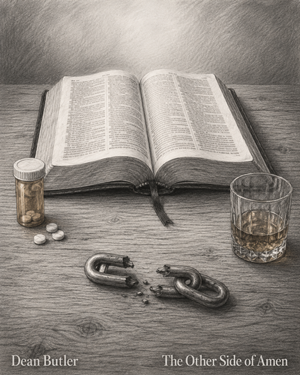
Sin may still tempt the believer, but it no longer owns him. Christ breaks sin’s power and gives us strength to walk in freedom.
A person who has been freed from drugs may still remember the feeling. The craving may return without warning. A certain place, person, smell, or memory can awaken an old desire that he thought was gone.
The drug no longer has to be in his hand to speak to his mind.
Sin works much the same way in the life of a believer.
When a person comes to Christ, he is forgiven, made new, and freed from the rule of sin. However, that does not mean the desire to sin disappears overnight.
“For the desire of the flesh is against the Spirit, and the Spirit against the flesh; for these are in opposition to one another.” (Galatians 5:17)
The battle continues because the believer still lives in a fallen body. The old desires may still call his name, but they no longer have the right to control him.
“Knowing this, that our old self was crucified with Him, in order that our body of sin might be done away with, so that we would no longer be slaves to sin.” (Romans 6:6)
Before Christ, sin was our master. We may have thought we were free, but we were obeying our own desires, following the world, and living under the power of sin.
Christ did not merely teach us how to behave better. He broke sin’s claim over us.
“For sin shall not be master over you, for you are not under the Law but under grace.” (Romans 6:14)
That does not mean a Christian cannot fall. It means he cannot remain comfortable under sin’s control.
A former addict may stumble and return to the drug. That failure does not prove he wanted to remain enslaved. It reveals how dangerous the old master still is. He must confess what happened, seek help, avoid the places that pull him back, and begin walking forward again.
The believer must do the same when he sins.
“If we confess our sins, He is faithful and righteous, so that He will forgive us our sins and cleanse us from all unrighteousness.” (1 John 1:9)
Confession is not an excuse to continue sinning. It is agreeing with God that our sin is wrong and turning back toward obedience.
We cannot feed the flesh all week and then wonder why temptation feels so strong. We cannot continue visiting the same places, watching the same things, entertaining the same thoughts, and keeping company with the same temptations while expecting victory.
“Make no provision for the flesh in regard to its lusts.” (Romans 13:14)
An addict who wants freedom does not keep drugs in the house just to prove he can resist them. A believer should not keep temptation close and call it faith.
God always provides a way to obey.
“No temptation has overtaken you except something common to mankind; and God is faithful, so He will not allow you to be tempted beyond what you are able, but with the temptation will provide the way of escape also, so that you will be able to endure it.” (1 Corinthians 10:13)
The way of escape may mean turning off the screen, leaving the room, ending a relationship, confessing to another believer, or refusing to entertain a thought. Sometimes the most spiritual thing we can do is run.
“Flee youthful lusts and pursue righteousness, faith, love, and peace.” (2 Timothy 2:22)
The grace of God does more than forgive us after we sin. Grace teaches us to say no before we sin.
“For the grace of God has appeared, bringing salvation to all people, instructing us to deny ungodliness and worldly desires and to live sensibly, righteously, and in a godly manner in the present age.” (Titus 2:11–12)
The pull of sin does not mean Christ has failed us. Temptation is not the same as surrender. Even Jesus was tempted, yet He did not sin.
The question is not whether sin still calls our name.
The question is whether we still answer.
“Do not let sin reign in your mortal body so that you obey its lusts.” (Romans 6:12)
A true believer may stumble, but he cannot make peace with the chains Christ died to break. He gets back up, confesses his sin, and continues following the One who set him free.
Sin may still call your name, but it no longer owns you.
________________________________________________________________________
“What I write is not for everyone, but what I write is meant for someone.” – Dean Butler
This work may be shared for ministry or personal use, but please credit the author when doing so.
© Dean Butler | The Other Side of Amen | All rights reserved.