


ARE YOU SEEKING A SIGN FROM GOD?
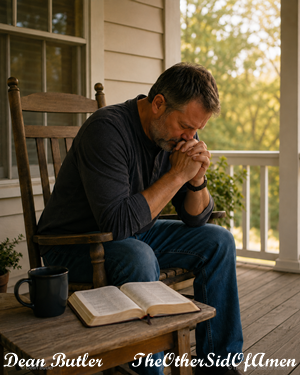
Should Christians ask God for signs? Scripture teaches us the difference between demanding proof and trusting what God has already revealed.
There are times when we would like God to make His will unmistakably clear.
“Lord, if You want me to do this, give me a sign.”
We may ask God to open a particular door, arrange a circumstance, send someone with the right words, or somehow confirm what we should do. Usually, we are not trying to challenge God. We simply do not want to make the wrong decision.
But there is a danger in depending on signs.
If we are not careful, we can begin looking for signs instead of looking to Scripture. We can start interpreting coincidences, feelings, circumstances, and unexpected events as messages from God. Before long, we may convince ourselves that God has told us something when He never said it at all.
The Bible does speak about signs, but we need to pay attention to the circumstances.
Some scribes and Pharisees once said to Jesus:
“Teacher, we want to see a sign from You” (Matthew 12:38).
Jesus answered:
“An evil and adulterous generation craves for a sign” (Matthew 12:39).
These men were not simply confused believers asking God for guidance. They had already seen evidence of who Jesus was, yet they continued demanding more. Their problem was not a lack of evidence. Their problem was unbelief.
Matthew 16 gives us an even clearer example. The Pharisees and Sadducees came to Jesus testing Him and asked Him to show them a sign from heaven.
Again, Jesus refused to play their game.
There is an important lesson there. God is not obligated to continually prove Himself to someone who refuses to believe what He has already revealed.
That principle can apply to believers as well.
Sometimes we ask God for a sign when He has already given us an answer in His Word.
We do not need a sign to tell us whether we should forgive someone. Scripture has already told us.
We do not need a sign to determine whether adultery is wrong.
We do not need a sign to decide whether dishonesty is acceptable.
We do not need a sign before obeying something God has clearly commanded.
The question in those cases is not, “God, what do You want me to do?”
He has already told us.
The question is whether we are willing to obey.
Jesus said:
“If you love Me, you will keep My commandments” (John 14:15).
There are, of course, decisions where Scripture does not give us the name of the person to marry, the town to live in, the job to take, or whether to buy one house instead of another. In those situations, we pray. We seek wisdom. We examine biblical principles. We listen to sound counsel. We consider the circumstances God has placed before us.
But we should be careful about declaring, “God gave me a sign.”
Circumstances can be misunderstood. Feelings can change. What looks like an open door today may close tomorrow.
Scripture does not change.
Paul wrote:
“For we walk by faith, not by sight” (2 Corinthians 5:7).
Walking by faith does not mean shutting off our minds or ignoring evidence. It means trusting God even when He has not shown us everything we would like to know.
Hebrews says:
“Now faith is the assurance of things hoped for, the conviction of things not seen” (Hebrews 11:1).
Faith trusts the character of God.
We know He is faithful even when we cannot see what He is doing. We know His Word is true even when circumstances confuse us. We know His wisdom is greater than ours even when we cannot understand where He is leading.
There is another danger in constantly looking for signs: eventually we may begin seeing what we want to see.
A person wants to make a particular decision, something happens that seems favorable, and suddenly it becomes, “God gave me a sign.”
But did He?
That is why Scripture must remain our foundation.
God has already given us something far better than a trail of mysterious clues. He has given us His Word.
When Scripture speaks clearly, obey it.
When Scripture does not address a particular decision directly, pray for wisdom and make the best decision you can using biblical principles.
And when you still cannot see what lies ahead, trust God.
You do not need God to prove Himself every morning.
You need to know Him well enough to trust Him when no sign appears.
Perhaps the better prayer is not:
“Lord, give me a sign.”
Perhaps it is:
“Lord, give me wisdom to understand Your Word, courage to obey what You have already said, and faith to trust You with what I cannot see.”
That kind of faith does not need a sign at every turn.
It knows the One who is leading.
“What I write is not for everyone, but what I write is meant for someone.” – Dean Butler
This work may be shared for ministry or personal use, but please credit the author when doing so.
© Dean Butler | The Other Side of Amen | All rights reserved.
