


Things We Should Not Assume as Christians
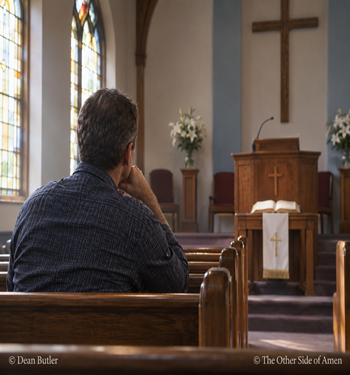
Christians often accept beliefs without questioning them. Are your assumptions about pastors, salvation, church, and biblical teaching supported by Scripture?
We all make assumptions. Sometimes we believe something simply because we have heard it all our lives. We accept it without question, never stopping to ask whether it is actually true.
Christians are no different. But when it comes to our faith, making the wrong assumptions can have serious consequences. There are some things we need to stop assuming and start examining in light of God's Word.
We should not assume that every pastor is saved simply because he preaches the Bible. A man can know Scripture, preach convincing sermons, and lead a congregation without ever having a saving relationship with Jesus Christ. Religious knowledge and religious activity do not prove salvation. Jesus warned in Matthew 7:21, “Not everyone who says to me, ‘Lord, Lord,’ will enter into the Kingdom of Heaven, but he who does the will of my Father who is in heaven.” If calling Jesus Lord does not prove salvation, neither does standing behind a pulpit.
We should not assume that everyone attending church is a Christian. Sitting in a church every Sunday does not make someone a follower of Christ. A person can sing hymns, give offerings, attend Bible studies, and still be lost. Salvation is not a reward for faithful attendance. Jesus said in John 3:3, “Most certainly, I tell you, unless one is born anew, he can’t see God’s Kingdom.” The question is not whether someone belongs to a church, but whether he belongs to Christ.
We should not assume that everything preached from a pulpit is true. Pastors are men, and men can be wrong. Some misunderstand Scripture, while others deliberately twist it to support what they want people to believe. Christians have a responsibility to examine what they hear instead of accepting it without question. Acts 17:11 tells us that the Bereans received the word eagerly while “examining the Scriptures daily to see whether these things were so.” If they examined the teaching of the apostle Paul, surely we should examine what our own pastors teach.
We should not assume that a large congregation means God approves of that church. A church may have thousands of members, beautiful buildings, excellent music, and plenty of money. None of those things proves that God approves of what is happening there. Large crowds can gather around false teaching just as easily as sound teaching. In 2 Timothy 4:3, Paul warned, “For the time will come when they will not listen to the sound doctrine, but having itching ears, will heap up for themselves teachers after their own lusts.” Popularity has never been the measure of biblical truth.
We should not assume that someone is saved because he repeated a prayer or walked down an aisle. There is nothing wrong with praying to God, but repeating words does not save anyone. Neither does walking to the front of a church or signing a decision card. Salvation comes through genuine faith in Jesus Christ, not by completing a religious exercise. Romans 10:9 says, “that if you will confess with your mouth that Jesus is Lord and believe in your heart that God raised him from the dead, you will be saved.” The important matter is not whether someone repeated a prayer, but whether he truly believes in Christ.
We should not assume that someone is spiritually mature because he has been a Christian for many years. Time alone does not produce spiritual maturity. A person can sit under preaching for forty years and still have a poor understanding of God's Word. Spiritual growth requires learning the truth and putting it into practice. Hebrews 5:12 says, “For although by this time you should be teachers, you again need to have someone teach you the rudiments of the first principles of the revelations of God. You have come to need milk, and not solid food.” The number of years someone has attended church tells us very little about how much he has grown spiritually.
We should not assume that a teaching is biblical because it is popular. Many teachings spread through churches because they sound good, make people feel better, or promise things people want to hear. But a teaching does not become true because thousands of people believe it. Paul warned in Galatians 1:8, “But even though we, or an angel from heaven, should preach to you any ‘good news’ other than that which we preached to you, let him be cursed.” Truth is established by God's Word, not by how many people agree with it.
We should not assume that someone knows God simply because he talks about Him. Some people can speak confidently about God, quote Scripture, and explain religious matters while living in open disobedience to Him. Knowing facts about God is not the same as knowing God. First John 2:4 says, “One who says, ‘I know him,’ and doesn’t keep his commandments, is a liar, and the truth isn’t in him.” Genuine faith produces a changed life. That does not mean a Christian will never sin, but it does mean he cannot treat obedience to Christ as something that does not matter.
These are not comfortable questions, and they are not intended to make us suspicious of everyone around us. They are intended to make us think. Too many Christians have accepted things for years without ever asking whether those things agree with Scripture. We trust pastors, churches, traditions, and religious practices, sometimes without realizing how much confidence we have placed in them.
But here is the question we need to ask ourselves. If something we have believed for years turns out to be contrary to Scripture, are we willing to admit we were wrong? Are we willing to change what we believe, even if it means questioning something our pastor taught us?
And pastors, these questions apply to you as well. The fact that you preach the Word of God does not excuse you from examining your own life, your teaching, or your relationship with Christ.
We should never be afraid to question what men teach. We should be afraid of accepting something as truth without examining it against God's Word.
The question is not what we have always believed. The question is whether what we believe is true.
________________________________________________________________________
“What I write is not for everyone, but what I write is meant for someone.” – Dean Butler
This work may be shared for ministry or personal use, but please credit the author when doing so. © Dean Butler | The Other Side of Amen | theothersideofamen.com
