


State lawmakers field budget questions from public ahead of session
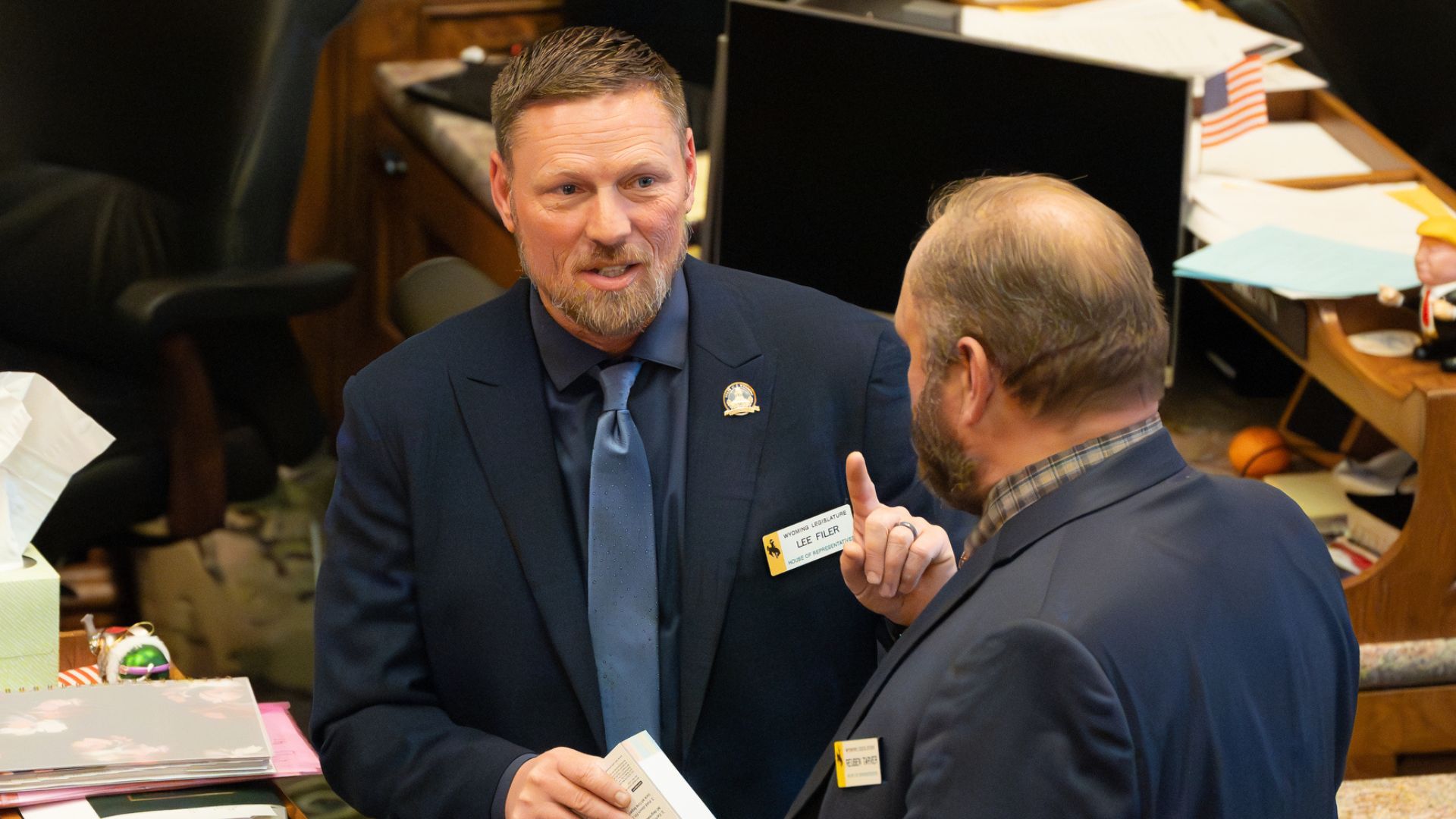
CHEYENNE — Tuesday evening, Laramie County residents met with local elected officials to have candid conversations about the state budget in advance of the Wyoming Legislature’s 2026 budget session.
The Laramie County chapter of Braver Angels, an organization dedicated to bridging the nation’s deepening political divides, hosted a legislative panel, creating a forum to dissect the complexities of the state budget.
The event featured four Republican state representatives from the Cheyenne area: Reps. Lee Filer, House District 44; Rob Geringer, HD 42; Ann Lucas, HD 43; and Daniel Singh, HD 61. While the panelists shared a party affiliation, they showcased a wide range of political views and priorities.
A 30,000-foot perspective
To ground the conversation in data, former Rep. Sue Wilson, R-Cheyenne, provided a high-level overview of the state’s financial landscape.
She explained that Wyoming grapples with the second most volatile revenue stream in the United States, trailing only Alaska. This instability is largely due to the state’s heavy reliance on severance taxes from coal, oil and gas, as well as investment income from the Permanent Mineral Trust Fund.
Wilson highlighted that K-12 education remains the state’s largest expenditure, though it is funded through a specialized foundation program rather than general state operations. She also noted a significant shift in revenue sources over the last two decades: In 2004, severance taxes were a dominant driver of the budget, but by 2024, investment income had grown to provide nearly triple the amount of severance taxes, a symptom of the downturn in the fossil fuel industry.
Property taxes
The most contentious issue of the forum was the future of residential property taxes. As property values continue to rise, many residents have called for relief, but local leaders worry about the impact on essential services.
Larry Wolfe, a Cheyenne City Council member, asked the panel about the “devastating effects” that significant tax cuts could have on schools, cities and counties.
Singh said he believes the choice should go to the people, supporting a statewide constitutional amendment to completely eliminate residential property taxes that would be voted on by Wyomingites.
“I don’t think that it’s fair for folks to be paying a tax on an unappreciated gain in value of their property,” Singh said, suggesting that emerging revenue streams could eventually offset the loss.
Lucas expressed optimism about the existing and potential further property tax cuts, saying that Laramie County has not experienced much hardship yet because local government has managed to fully bank its property tax revenue over the last two years.
She also advocated for putting further cuts to a vote and said local governments could also be better stewards of taxpayer funds, expressing some concern for the impact cuts may have on fire districts.
In contrast, Geringer urged caution and restraint. Though he voted in favor of 25% property tax cuts in the 2025 general session, he warned that replacing property taxes with a statewide sales tax would shift control from local communities to the state government, creating a reliance on Cheyenne for local funding.
Filer echoed this concern, pointing out that an average homeowner paying $1,500 in property tax might actually pay more if the state added a 2% sales tax to compensate for the loss.
“How many of y’all plan on buying a truck next year?” Filer asked the audience. “That 2% (of additional sales tax) will be way more than your property tax ever was.”
Public safety
Former Rep. Tamara Trujillo, R-Cheyenne, attended the meeting to ask the current lawmakers about her concerns regarding attraction and retention of law enforcement, specifically within the Wyoming Highway Patrol.
She said troopers are being sent home after 40 hours to avoid overtime costs, despite high call volumes, and Wyoming’s patrol ranking near the bottom of the country for pay.
Geringer expressed deep concern over the 40 vacancies in WHP, noting that Wyoming has become a “training ground” where troopers gain experience, only to leave for higher- paying jobs in neighboring states like Colorado.
Filer confirmed this disparity, stating that a recruit in a Colorado academy often earns more than a Trooper II in Wyoming. All four representatives pledged to prioritize law enforcement funding, with Lucas stating, “We need to do a very good job for them, because we can do it. We must do the best job we can do.”
Decision making
The question of legislative accountability was brought forth by attendee Marguerite Herman, who asked members of the panel how they make decisions while navigating the hundreds of amendments and spending decisions faced during a budget session.
Citing a recent committee vote to remove funding for a summer feeding program for children, Herman asked whether lawmakers take their cues from party leadership, polling or the specific needs of their districts.
Singh responded by dispelling rumors of outside pressure, at least for him, asserting that his decisions are never directed by “mass text messages,” but are reached by weighing community impact against constitutional responsibilities.
Filer described his strategy as an “all-of-the-above approach,” noting that he considers the people of HD 44 to be his true “boss.” He specifically addressed Herman’s example, stating that the summer feeding program was an issue “near and dear” to his heart and expressing a desire to discuss the matter further with legislative leadership.
The panelists also highlighted the heavy research required for the role. Geringer explained that his background as an engineer and business owner informs his process, though he seeks out experts when he is not the most informed person on a topic.
Lucas emphasized that the volume of reading is enormous, noting she spends time comparing current requests against historical spending to act as a careful steward of taxpayer dollars and often leans on fellow lawmakers for subject matters she does not know as much about.
Navigating political caucuses
The forum also touched on internal party dynamics. Lucas identified herself as a member of the Wyoming Freedom Caucus, defining her focus as “controlling the growth of government spending” and ensuring the state knows exactly what it is spending money on.
Singh, however, revealed that he had voluntarily resigned from the Freedom Caucus.
While he maintained he did not have ideological differences with the group, he stated he preferred to “personally conduct [his] own business” and did not want to be told what to do or how to vote.
Filer and Geringer are not members of the Freedom Caucus.
Local revenues
As the forum drew to a close, the focus shifted to revenue generation.
Cheyenne City Council member Michelle Aldrich asked how the state intended to help cities replace lost property tax revenue. Geringer pointed to the money generated by data centers in Laramie County as a model for economic diversification.
Filer suggested re-evaluating the direct distribution formula to ensure a higher percentage of the sales tax generated in cities stay within those communities to fund police and fire departments.
“Amen,” Aldrich responded to that suggestion.
The event concluded with a reminder of the opening statement by moderator Bob Wilson that Wyomingites are, first and foremost, neighbors.
Singh likened the political process to his choir practices, noting that a “bass is not a tenor” and a “soprano is not an alto,” but all parts are necessary to create music, just as opposing political views must work in harmony to create effective policy.
This story was published on Jan. 15, 2026.