


‘A mess and a shock:’ Facing a drastic rent increase, mobile home owners lack protections
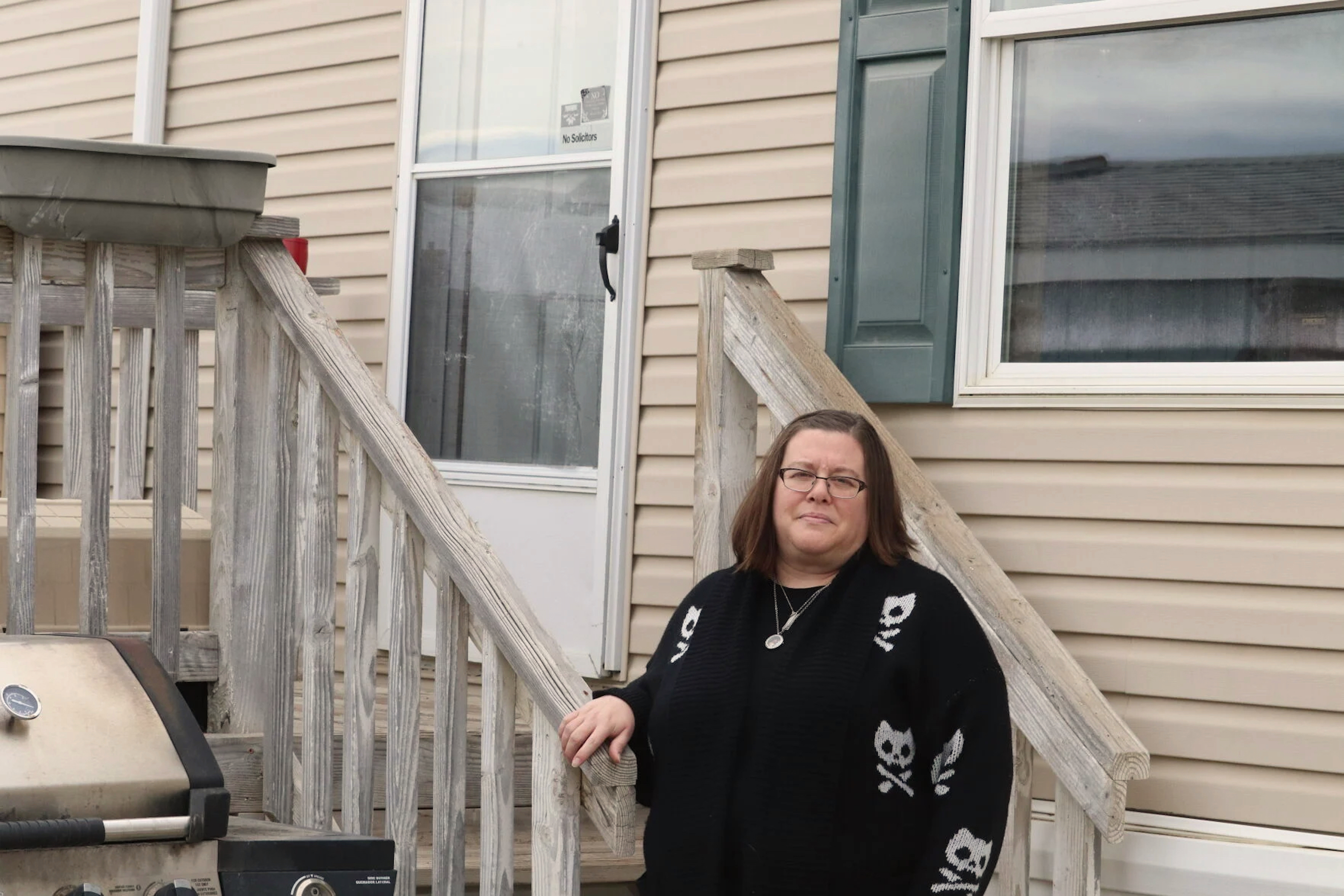
Westside Mobile Home Court resident Lynette Grant began rallying her neighbors after a 56% lot rent increase was announced for 2026. Photo by Hannah Ward, Casper Star-Tribune.
CASPER — When Lynette Grant woke up in late October to a notice detailing a 56% jump in rent taped to the door of her mobile home, it didn’t take long to start questioning why the increase was so drastic — and how it was even allowed.
Grant worried what the surge from $400 to $625 beginning in January 2026 would mean for her neighbors in Westside Mobile Home Court in Mills on fixed incomes and brought her concerns to a city of Mills work session in November, where she was informed the city had little power to help the community.
In the aftermath of the lot rent increase notice, Grant’s research pointed her to a glaring issue for seeking recompense: Wyoming has the least protections for mobile home owners who lease land of nearly any state.
In Wyoming, there is no law dictating how far in advance a property owner must provide notice of a rent increase, nor is there a limit on how large a rent increase can be.
Mobile home owners in Wyoming have no right to sell a home without relocating, only a three-day grace period for late rent payments and no right to a renewable lease, according to a report from Freddie Mac, or the Federal Home Loan Mortgage Corporation, using data from 2016.
Most people who live in manufactured housing, more commonly referred to as mobile homes, own or finance their home but lease the land, according to the report. For homeowners, this creates a risk of needing to move if they fall behind on their rent.
Grant’s petition protesting the drastic increase and requesting a meeting between management and the community received 22 signatures from her neighbors—around one-third of the court. Grant said she spoke with a few other residents who she noted expressed frustration with the rent increase but did not reach out again to sign the petition.
“I’m not sure that they were expecting the response that they got from a lot of people here,” Grant said.
“The new rate is necessary and reflects the full value of the lot, including water, trash, and sewage,” Jessica Bowlby Legacy Property Management Tenant Relations manager, wrote in an email to residents on Nov. 4. “While you feel the increase is ‘exorbitant,’ and despite your belief that rent has increased annually, the park’s fees have lagged significantly behind the market.”
The property owners pay for the trash, water, sewage and snow removal in the mobile home park, according to the email, though Grant said there has not been snow removal in the time she has lived in the court.
“There’s not really a whole lot that I thought was a justification of charging that much,” Grant said.
‘It’s not really yours’
Grant chose to buy her nearly-new mobile home for $42,500 rather than live in an apartment after going through a divorce, filing for bankruptcy and having to move back in with her parents because it allowed her to keep her pets, she said.
“I couldn’t afford a house, but I couldn’t live in an apartment. I wasn’t going to get rid of my animals,” she said.
What Grant didn’t know, she said, was that property owners can take possession of a resident’s mobile home as back pay if you fail to pay your lot rent.
“I would also encourage anyone not to buy a trailer unless you have your own land. That’s been my takeaway from all this, too, is don’t buy a trailer,” Grant said. “If you don’t have anywhere to put it that’s yours, it’s not really yours.”
Wyoming is also one of nine states without any protections for resident associations, which manufactured home residents sometimes form to feel safer when speaking up about problems with property owners, according to a 2015 report from the National Consumer Law Center.
“The laws need to change,” Grant said. “I really do think there should be a cap on a percentage that they can raise at a time because it’s just ridiculous that they expect average people to do that, especially when they’re on Social Security, or they have a medical condition, or any number of things.”
The cost to move and the cost to stay
In an email to the city of Mills, Property Manager Rebeca Ruano said the increase to $625 would be the third time the rent was raised since 2010. The lot rent went up to $360 in 2022 and up to $400 in 2024, according to the message sent ahead of a November city work session where Grant brought her concerns.
She said she recalls the rent increasing gradually between those years and never more than $25-30 at a time.
“By the time it’s said and done, you’re probably gonna spend more moving it than it’s worth, which is why a lot of people don’t, and they sit here forever,” Grant said.
The average cost range nationwide for moving a mobile home is between $1,000 and $8,000, but costs increase with distance and whether utilities need to be disconnected and reconnected, according to Forbes.
And though the increase brings Westside closer to lot rent rates at comparable mobile home parks in the area, it lacks many of the benefits other parks offer.
For example, A & First Street Mobile Home Park has a monthly lot rent of $625, but is limited to 55+ residents and is only a few blocks away from Hilltop Shopping Center.
At Lariat RV — one of only two other neighborhoods in Mills zoned for mobile homes — existing manufactured homes cannot be moved in, and prospective tenants must rent a trailer for a minimum of $650 per month.
Aspen Community in Evansville charges $595 per month and is just across the interstate from Eastridge Mall. Riverside Mobile Home Court charges $450, only slightly more than Westside’s current rent, for roughly the same access to nearby restaurants and grocery options.
“We’re surrounded by industrial, you know, and we don’t have a grocery store. We don’t have schools anymore,” Grant said.
And in Mills, manufactured homes cannot be relocated within city limits if they are more than 20 years old, which was extended from 15 years old in 2016.
Mobile homes in Casper can be relocated so long as they were not built before 1976. Evansville’s zoning regulations do not list an age limit for mobile homes.
‘I won’t be able to buy my medicine’
For older residents in Westside Mobile Home Court, the rent increase is especially difficult.
Catherine Hammer, 74, relies on $980 per month from Social Security benefits to pay for rent, utilities, groceries and her $25 internet bill — the only non-essential in her budget, she said.
“I don’t know if I’m going to be able to pay my electric bill,” Hammer said. “I won’t be able to buy my medicine.”
With a broken car, Hammer depends on family to go to medical appointments and run errands. Many of her neighbors in the court are also seniors, and some are on disability, she said.
“It’s just a mess and a shock,” Hammer said.
Hammer chose a manufactured home because she wanted a yard of her own and to not be bothered by upstairs and downstairs neighbors in an apartment, she said.
“I don’t know how long I’ll stay. I don’t know what I’m going to do. I have no idea what else I would do. Where would I go?” she said.
Moving to a senior living facility would cost around the same amount as relocating her home, if not more, Hammer added.
The average cost of independent senior living in Wyoming is around $3,400 per month, according to senior living data amalgamator A Place for Mom, and assisted living programs can reach more than $5,000 monthly.
When Hammer moved into the court in 2002, she paid $125 per month in lot rent, she recalled. She bought a manufactured home in 2010 after taking custody of her three grandchildren.
“It just bothers me that we don’t have any legal recourse, and we don’t know who the owner is,” she said. “Who do we have? Nobody. We don’t have any legal rights.”
Westside Mobile Home Court is managed by Legacy Property Management, who told the Star-Tribune in November the property was no longer owned by RPV Investments, LLC, but later declined to say whether the property had been sold at all or who owned it.
“My biggest fear is retaliation from them, but I’m hoping that won’t happen because I have been here for so long,” Grant said. “I just really did not want to be resigned to the fact that they could do that and not own up to it.”
This story was published on Dec. 13, 2025.