


Measure to ban ‘explicit’ books from libraries falters as clock runs out in Wyoming Senate
The measure easily cleared the House of Representatives and narrowly passed a Senate committee. But it failed to advance ahead of a procedural deadline.
JACKSON — On Tuesday, Wyoming lawmakers killed a bill that backers saw as a common sense way to keep “sexually explicit” books out of kids’ hands.
Critics saw it as a book ban. Teton County librarians opposed the bill.
“It is pure and simple censorship,” Teton County Library Director Kip Roberson said in an interview. “It removes materials from the hands of the intended audiences.”
The bill in question, House Bill 10, gained traction in Cheyenne but died Tuesday when the Senate did not take it off the upper chamber’s general file ahead of the deadline to do so.
The Wyoming House of Representatives previously sent it to the Senate for consideration on a 48-13 vote, with one lawmaker absent. On Feb. 25, the Senate Judiciary Committee voted 3-2 in favor of the bill.
Chair Sen. Jared Olsen, R-Cheyenne, Sen. Larry Hicks, R-Baggs, and Sen. John Kolb, R-Rock Springs, voted “aye.” Sen. Gary Crum, R-Laramie and Sen. Barry Crago, R-Buffalo voted “nay.”
No Teton County lawmakers are on the Judiciary Committee.
But in the House, Reps. Andrew Byron, R-Hoback, Liz Storer, D-Jackson, and Mike Yin, D-Jackson, all voted against the bill.
Had it passed, librarians would have needed to ensure there were no sexually explicit books in the children’s section of a library. The bill defines “sexually explicit.”
HB 10 would not have, however, required sexually explicit books to be removed from all state libraries. Instead, librarians would have been required to store books deemed sexually explicit in other sections.
As drafted, the bill would have taken effect July 1.
In committee, Crago successfully amended the bill to allow counties to opt out of the policy. The amendment would be a boon to local control, Crago said.
Had the bill passed, at least one Teton County commissioner wanted to opt out: Len Carlman.
“The bill is an unconstitutional intrusion on free speech,” Carlman said in an interview. “We should have zero patience for it.”
The debate
The committee’s 3-2 vote came after an hour or so of testimony.
A youth pastor, an equality advocate, multiple librarians, a parent who homeschooled their children, attorneys and a doctor lambasted the bill. A grandfather, a public health professional and representatives for Moms for Liberty, an organization that fights for parental rights in education, and the Wyoming Family Alliance, a Christian advocacy organization, spoke in favor.
Library bill
Debate hinged on whether the bill was a book ban or a common sense mechanism to keep books about sex out of kids’ hands.
In all, nine people spoke in favor of the bill. Five people spoke against it.
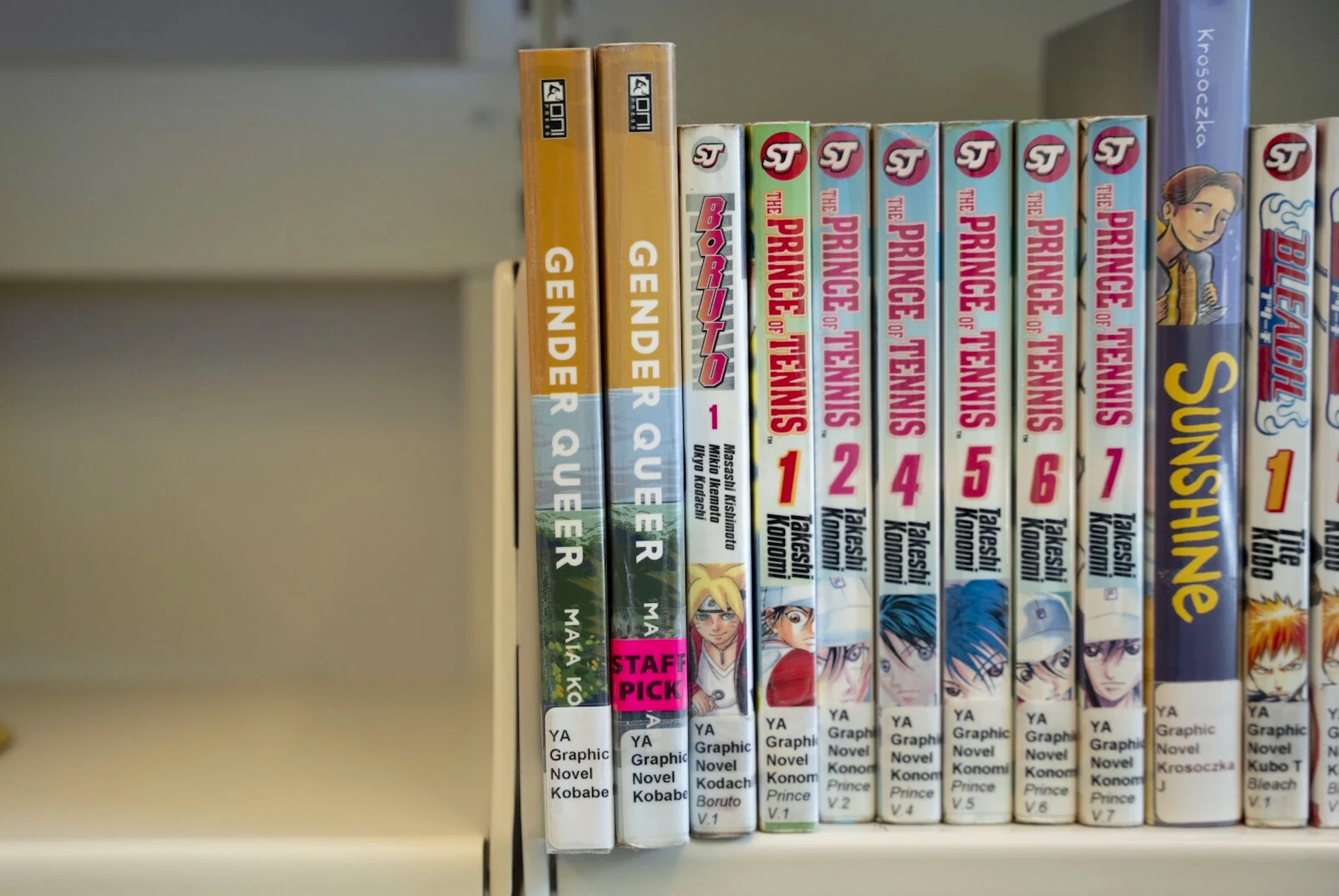
Rep. Ann Lucas, R-Cheyenne, a member of the Wyoming Freedom Caucus, argued for the bill. She brought two books: Maia Kobabe’s “Gender Queer” and Erika Moen’s “Let’s Talk About It: The Teen’s Guide to Sex, Relationships and Being a Human.”
“I consider them the most notorious,” Lucas said. They “contain explicit sexual illustrations, graphic descriptions intended for mature audiences.”
In the same way the state regulates driving and buying alcohol or tobacco, it should regulate reading, said Patricia McCoy, speaking on behalf of multiple Moms for Liberty chapters across the state.
“These policies are not controversial,” McCoy said. “Parents should be able to trust that children’s sections are intentionally curated for youth.”
McCoy urged legislators to reject Crago’s amendment.
The opponents
“Gender Queer” and “Let’s Talk About It,” the two books Lucas referenced, are available at the Teton County Library. The library catalog identifies “Gender Queer” as a young adult graphic novel and “Let’s Talk About It” as young adult nonfiction.
Opponents of HB 10 argue the books are meant for their intended audience. Moving them means young people may not be able to access them, Teton County Library Director Roberson said. He also disagrees with the bill’s premise.
“There’s no pornography in the library,” Roberson said. “We’re chasing a boogeyman that doesn’t exist.”
Marylee White, Teton County Library Board chair, echoed Roberson’s sentiment.
“If you move a book to another part of the library where the intended audience for that book doesn’t go, that is censorship,” White said in an interview.
Unlike Teton County Library, which has a kids and adults section, many small libraries across the Equality State have only one room, White said. Those libraries would have had to get rid of the books altogether if the bill passed, she said.
Other opponents, like Melissa Snider, said there are not multiple sections in school libraries, meaning the bill would have been a ban in those locations. School libraries are often just one room, staffed by one person, who would have to review the new policies — and books on the shelf — for compliance.
Snider is a library media specialist for Munger Mountain Elementary School who said she was speaking on behalf of the Wyoming Library Association’s School Library Interest Group, not the Teton County School District.
When parents have a concern about a book in the library, Snider is ready to talk to them. The state does not need to be involved, she said.
“They just obviously don’t trust us to do our jobs,” Snider said. “That’s what really hurts about it.”
This story was published on March 4, 2026.