


Legislature grapples with funding Teton County schools
Jackson considered a state ‘anomaly’ as housing crisis, students learning English require more resources.
JACKSON — When it comes to funding for public education, Teton County School District is apparently considered a “unicorn” in the Equality State.
State lawmakers heard from school district leaders on Thursday and Friday about the unique factors impacting Teton County’s tight education budget, from the high cost of living for teachers and faculty to the number of students learning English who require extra time and resources to get across that graduation stage.
Even officials from other school districts that struggle with similar challenges, such as understaffing in rural areas, agreed that Teton County is different.
“We are a unicorn,” School Board Trustee Kate Mead testified on Friday. “I don’t mean to suggest that other school districts don’t have these same issues; of course they do. But I just wanted to point out that we have spent a lot of time making this work.”
Or, at least, trying to do so.
The Wyoming Legislature’s Select Committee on School Finance Recalibration will take Teton County’s needs into account when deciding whether, and how, to alter long-term public school funding in 2026.
The legislative “recalibration” process occurs every five years, and lawmakers spend a year studying the costs of education and working with consultants and school districts before coming up with a recommended solution. Many school districts, including Teton County’s, are asking for support to pay for higher teacher salaries, as well as school resource officers, mental health counselors, new technology, food services and more.
Members of the legislative select committee asked questions of district leaders, including what they wanted out of the recalibration process and whether they believe they had been treated fairly in the past.
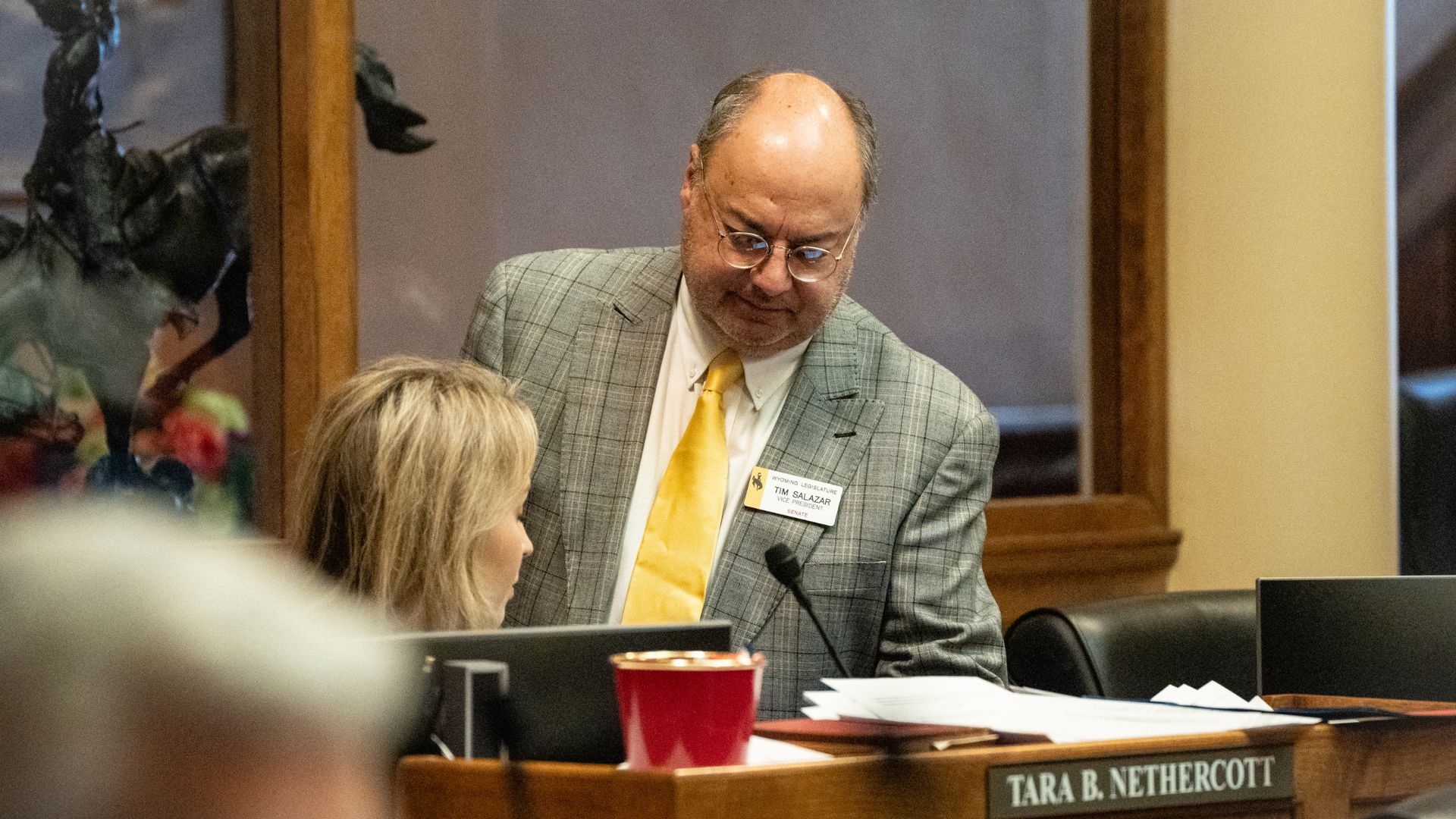
“There’s recalibration, and then there’s Teton County,” Committee Co-Chair Tim Salazar, R-Riverton, said, calling Teton County an “anomaly” because of its high cost of living.
In response, Kristen Mayo, the school district’s director of resources, said its biggest challenge, specifically, is the astronomical cost of housing.
“When we talk about what living in our community actually looks like... for a teacher, it’s near impossible for our teachers to even dream of buying a house and living permanently in Teton County,” Mayo said. “So, that brings us to what it costs for somebody to rent in Teton County.”
Teton County residents pay 153% more in rent than the state average, according to the most recent Wyoming Economic Analysis Division report. In Lincoln County, which faces the second-highest housing costs in the state, renters pay about 20% above the state average.
Teton County School District has tried to increase salaries enough so that only 30% of teachers’ and other employees’ incomes goes toward rent payments. Officials have also asked voters to help subsidize new housing projects for staff.
But the way public education is funded by the state puts the district in a real pinch.
The K-12 funding model provides a guaranteed level of funding to every school district through a “block grant,” a lump sum of money allocated based on number of students enrolled, special education needs and transportation costs, among other factors. The model recommends spending a base amount in specific areas, such as salaries, technical education or supplies, but districts can choose to spend the money how they see fit, making up costs in some areas to fund salaries at a higher level, or pay for extra counselors not included in the grant.
If the model isn’t updated often enough to take into account new or evolving needs, such as school resource officers, mental health resources or inflation, it can exacerbate the problem areas and leave districts floundering. Many school districts have told lawmakers they are in that position, and consultants also have identified gaps.
The Legislature has provided some relief through a regional cost adjustment, which annually provides districts extra funding based on the cost of living in their community. Mayo and other district leaders consider this the best way to address Teton County’s unique issues without throwing off the entire funding model for all of the other school districts in the state.
But even the cost-of-living adjustment is underfunded, Mayo said.
The cost of living in Teton County is 78% above the statewide average, but the state only funds Teton County School District for a cost of living 70% above Wyoming’s average. The district, in turn, chooses to cut costs in other areas to pay staff 74% above Wyoming’s average cost of living.
Lawmakers on Friday gave no indication whether they plan to increase funding or adjust the model, but they did listen. Many were disconcerted by the idea of a 400-square-foot studio apartment renting for $3,000 per month — and Teton County teachers never getting the chance to own a home.
Teton County School District Interim Superintendent Scott Crisp said he’s been lucky enough to work in the district for 24 years, after starting his career as a rookie U.S. history teacher. He said there aren’t many people left in the district with as many years under their belt.
“That’s not a criticism,” he said. “That’s just a reality. I believe a healthy community allows families to have children, to be a family and to stay in the community. I think we need to ask ourselves, what is a healthy community in Wyoming?”
This story was published on Sept. 10, 2025.