


Legislative session recap — Legislators recap busy 2026 budget session
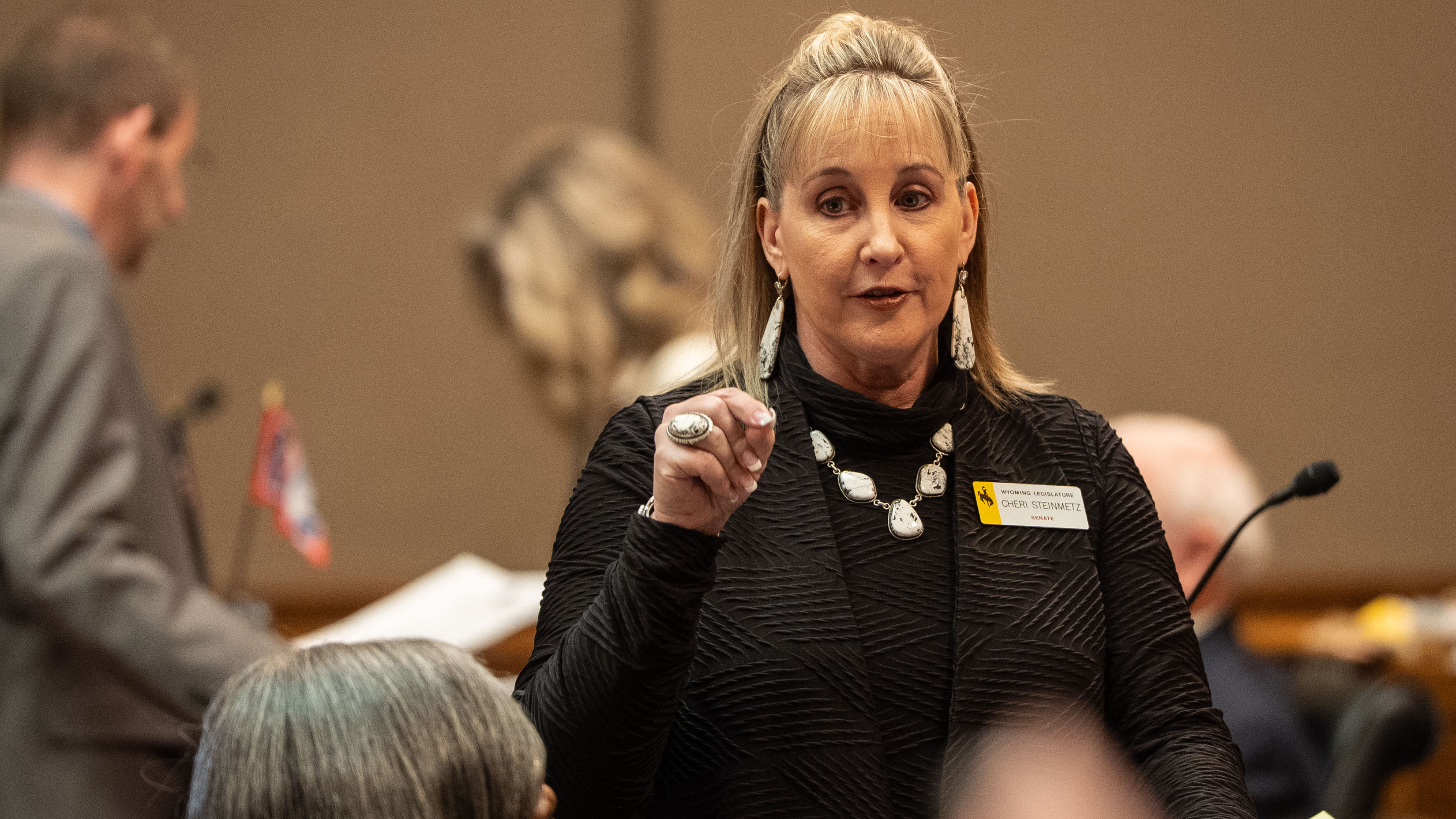
Sen. Cheri Steinmetz, R-Lingle — photo by Michael Smith
Wyoming lawmakers representing Weston County are highlighting key outcomes from the recently concluded 2026 budget session, pointing to major policy changes, funding decisions and ongoing legislative debates.
The Legislature wrapped up the session March 11 after returning to consider potential veto overrides by Gov. Mark Gordon. While several bills were vetoed, most legislation remained intact and the governor’s overall budget proposal was largely preserved, with some additions approved by lawmakers.
Among the notable bills passed this year was the Human Heartbeat Act, which restricts abortion once a fetal heartbeat is detected. During debate, Sen. Cheri Steinmetz, R-Lingle, successfully introduced an amendment ensuring that if the new law is blocked by the courts, Wyoming’s previous 2022 abortion law would automatically take effect.
Lawmakers also approved the Stem Cell Freedom Act, according to Steinmetz, intended to protect access to emerging stem cell treatments while promoting medical innovation.
Several measures addressed public safety concerns, she noted. The Legislature increased criminal penalties for individuals distributing fentanyl to minors and approved legislation prohibiting sex offenders from living near child care facilities. Another bill reinforces requirements that commercial truck drivers be able to read and communicate in English to improve highway safety.
Infrastructure and public services were also part of the legislative agenda. Lawmakers approved funding to support Wyoming’s 911 call centers and begin transitioning the state to next-generation emergency communications technology.
Education policy also received attention during the session. Legislators increased funding for Hathaway Scholarships to help more Wyoming students pursue higher education in the state and passed legislation allowing home-schooled students to participate in school activities and athletics.
House District 2 Rep. J.D. Williams said the Legislature also approved a biennium budget similar to the governor’s proposed $9.9 billion spending plan after differences between the House and Senate were resolved in conference committee.
However, Williams noted that some proposed programs were not funded, including SUN Bucks, which would have provided grocery assistance to eligible school-aged children during the summer, and SNAP-Ed, a nutrition education program for low-income residents. Both programs failed to receive state funding during budget debates.
Williams also pointed to legislation establishing direct distributions of state sales and use tax revenue to counties and municipalities, which supporters say will provide more consistent funding for local governments.
Despite the number of bills approved, Steinmetz said the session was complicated by time constraints that prevented lawmakers from addressing several remaining proposals before adjournment.