


IT IS STILL SIN
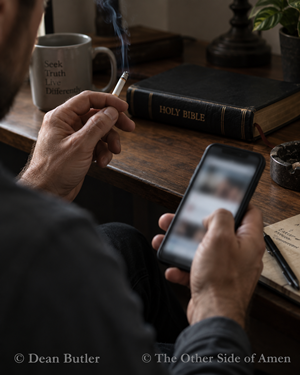
The Bible does not name every modern sin, but Scripture still gives clear truth for lust, greed, addiction, dishonesty, gambling, pornography, and more.
The Bible does not mention pornography websites, vaping, social media, tobacco, online gambling, sexting, illegal drug use, or stealing digital material. Those things did not exist when Scripture was written, but that does not mean the Bible has nothing to say about them.
Sometimes people defend questionable behavior by saying, “The Bible never says I cannot do that.” But that is not a very good way to determine whether something is right or wrong. God did not give us a list containing the name of every sin mankind would ever invent. He gave us truth that reaches the heart of every generation.
Pornography is a good example. The Bible does not use the word pornography the way we use it today, but Jesus dealt directly with lust. Matthew 5:28 says:
“But I say to you that everyone who looks at a woman with lust for her has already committed adultery with her in his heart.”
The technology changed, but the sin did not.
The Bible does not mention sexting either, but it has plenty to say about sexual immorality, lust, purity, and what should come from our mouths and our lives. First Thessalonians 4:3 says:
“For this is the will of God, your sanctification; that is, that you abstain from sexual immorality.”
The method changed, but the sin did not.
What about getting high on drugs? Scripture does not contain a list of every chemical people might someday use to alter their minds, but it repeatedly warns against drunkenness and losing control of ourselves. Ephesians 5:18 says:
“And do not get drunk with wine, in which there is debauchery, but be filled with the Spirit.”
First Peter 5:8 also says:
“Be of sober spirit, be on the alert. Your adversary, the devil, prowls around like a roaring lion, seeking someone to devour.”
The substance may change, but the principle does not.
Then there is social media. Facebook, TikTok, and X are obviously not mentioned in Scripture, but gossip, slander, anger, boasting, lying, jealousy, and filthy speech certainly are. A person can commit very old sins using very new technology.
James 3 warns about the destructive power of the tongue. Today we might need to add the keyboard. What we type can wound people just as surely as what we say, and hiding behind a screen does not make sinful words any less sinful.
Online gambling is another example. The Bible does not say, “Do not place a sports bet on your phone,” but Scripture repeatedly warns about greed, the love of money, covetousness, and the desire to get rich. First Timothy 6:10 says:
“For the love of money is a root of all sorts of evil, and some by longing for it have wandered away from the faith and pierced themselves with many griefs.”
The betting app is new, but greed is ancient.
The Bible does not specifically mention pirating movies, downloading something illegally, or using someone else’s work without paying for it. But Exodus 20:15 says:
“You shall not steal.”
Taking something that does not belong to us does not suddenly become acceptable because it is digital instead of sitting on a store shelf. The same principle applies to dishonesty at work, cheating on taxes, falsifying records, and lying on applications. Scripture may not name every modern form of deception, but God has already told us what He thinks about lying and stealing.
Tobacco is another example people sometimes bring up. The Bible does not say, “You shall not smoke,” and we should not pretend that it does. But Scripture does tell us to consider whether something controls us, harms us, or becomes a master over us. First Corinthians 6:12 says:
“All things are permitted for me, but not all things are of benefit. All things are permitted for me, but I will not be mastered by anything.”
That principle should make us examine habits involving tobacco, alcohol, food, entertainment, phones, gaming, shopping, and anything else that begins controlling our lives. Something does not have to be specifically named in Scripture before we ask whether it has become our master.
The question should not always be, “Where does the Bible specifically say I cannot do this?” A better question is, “What does Scripture say about the desire, motive, or behavior behind this?”
Is it feeding lust? Is it greed? Is it dishonesty? Is it harming someone else? Is it controlling me? Is it drawing me toward holiness or away from it? Can I honestly do it before God with a clear conscience?
Technology changes, culture changes, and the names we give things change. Human nature does not change, and neither does God’s standard.
Sin does not stop being sin simply because mankind invented a new way to do it.
Before we say, “The Bible does not mention this,” we should ask a better question: What has God already said about it?
________________________________________________________________________
“What I write is not for everyone, but what I write is meant for someone.” – Dean Butler
This work may be shared for ministry or personal use, but please credit the author when doing so. © Dean Butler | The Other Side of Amen | All rights reserved.
