


Campbell County Fire Department waits for federal grant for coal-seam fire mapping efforts
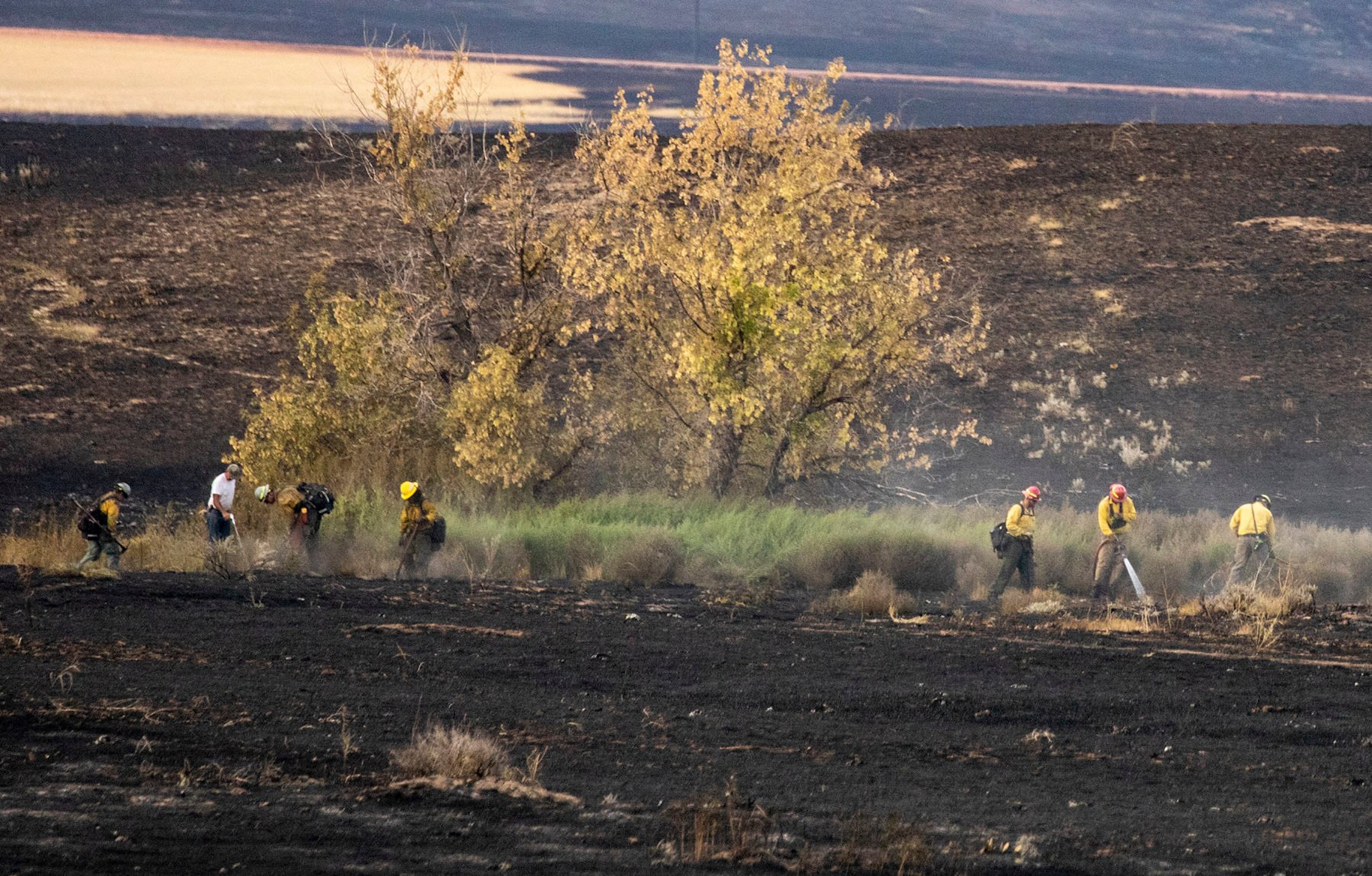
Firefighters work to protect a green patch containing a cluster of trees along Middle Prong Road as they continue to work on containing the Horse Creek Butte Fire Sept. 3, 2020. The fire was caused by a coal seam and grew to more than 3,000 acres. Gillette News Record file photo.
GILLETTE — This year, with a little help from Uncle Sam, the Campbell County Fire Department will get a better idea of how many coal-seam fires are burning out in the county.
As part of its preparation efforts for the 2026 fire season, the Campbell County Fire Department has joined with fire departments in Johnson and Sheridan counties in neighboring counties to submit a $1 million grant request. Crafted with the help of the county commissioners office, the grant, if approved by FEMA, would allow the counties to identify potential coal-seam fires across their various jurisdictions.
A seemingly innocuous but dangerous natural reaction, coal-seam fires can occur when overland fires make contact with pockets of coal close to the surface, with the coal-seam fire itself often burning underground continuously even after the surface fire has passed spreading across the seam to various points along the vein.
In addition to posing a health risk to those nearby due to the release of toxic and harmful chemicals due to the combustion, the fires also slowly weaken the soil around it, leading to the collapse of topsoil which, combined with sufficient vegetation above, can ignite a new fire without many of the tell-tale signs firefighters keep an eye out for.
“The fear is, if it ignites the vegetation and it starts a fire, then it can take some time in order for it to be reported,” Fire Marshal Stuart Burnham said. “The fire can grow, and it can be of a significant size before anybody notices. If you have multiple coal seams that are ignited around the county, then it can create multiple ignition points.”
Such fires are often difficult to spot from the ground, requiring large numbers and manhours to locate, which is why Burnham hopes to take the search into the air, which would provide firefighters a better sense of what each department is dealing with and allow them to take steps to mitigate future dangers.
“The goal right now is to map where they’re at so that way we can help and define what the scope of the problem is,” Burnham said. “Right now, we just don’t know how many coal seams there are. We know that there’s likely more now than there were years ago when they were previously identified.”
The application was submitted last year.
If the grant is approved, Burnham said, the departments could contract with a pilot, whether with a plane or a drone, to map out potential hot spots for more detailed exploration back on the ground. Once located, firefighters can then gauge the danger of re-ignition and the harm to the local area, which is an important question as the department considers prevention efforts while leaving vegetation for the community’s ranching needs.
“The more ignition sources you have, the higher risk of wildfire that you have,” Burnham said. “In our county, we rely heavily on industry, the oil, the gas, the coal, but ranching is another large part of the industry. If those wildfires start and they burn up the range and the vegetation, then the livestock have less feed to eat, and then it’s more difficult on the rancher to care for the livestock. That’s really the big risk.”
Burnham said he and his fellow firefighters are hoping to hear back later this year, pointing out that the request would have to travel its way through the state up to FEMA for review and consideration, with a final project deadline set in June 2028.
He added that lowering the number of potential fire sources, especially previously unknown ones such as coal-seam fires, will allow the department to focus on other threats and, hopefully stop potential fires.
“We are just trying to keep people safe, and then trying to keep as much vegetation around as possible for the wildlife and livestock,” Burham said.
This story was published on Jan. 17, 2026.